FLEX 1616-5092-0010-8214 Flexradio Maestro Control Console
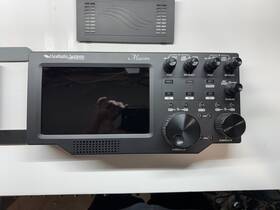
( Brand: Flex ), ( Manufacturer Part Number: 1616-5092-0010-8214 ), ( Model: MAESTRO ), ( Type: Ham Radio Transceiver ), ( Unit Type: Unit ), ( Manufacturer Warranty: No ), ( Color: Black ), ( Compatiblebrand: Universal ), ( Country Of Origin: United States )
Review FLEX Flexradio Maestro Control Console Ver Dead
The **FlexRadio Maestro Control Console (Model 1616-5092-0010-8214)** is a cutting-edge, all-in-one operating system and control hub designed to revolutionize the way radio enthusiasts, DXers, and amateur radio operators interact with their FlexRadio transceivers. Engineered with precision and built for both performance and versatility, the Maestro serves as the central nervous system for FlexRadio s lineup of high-end SDR (Software-Defined Radio) systems, including the Panadapter, SmartSDR, and other advanced digital modes. Its sleek, compact form factor belies its powerful capabilities, offering a seamless integration of hardware and software to deliver unparalleled control, monitoring, and functionality at the touch of a button.
At its core, the Maestro is a dedicated, high-performance computer running a custom-built version of SmartSDR, FlexRadio s proprietary operating system, which is optimized for real-time signal processing, low-latency operation, and intuitive user interaction. Unlike traditional PC-based setups that rely on external monitors, keyboards, and mice, the Maestro consolidates everything into a single, ergonomic console with a high-resolution, full-color touchscreen display. This 10.1-inch capacitive touch interface provides crisp visuals and responsive feedback, allowing operators to navigate menus, adjust settings, and monitor signals with effortless precision. The display is designed to minimize glare and maximize visibility, even in bright ambient lighting, ensuring clarity during both day and night operations.
One of the Maestro s standout features is its seamless connectivity to FlexRadio transceivers, enabling full control over transmission parameters, tuning, and signal processing with minimal latency. The console supports all major FlexRadio models, including the Flex-6000 series, Flex-6700, and other SDR platforms, allowing users to manage multiple transceivers simultaneously through a single interface. This capability is particularly valuable for contesters, DXers, and multi-band operators who need to monitor and transmit across a wide range of frequencies without the need for additional hardware. The Maestro also integrates with FlexRadio s advanced digital modes, such as FT8, JT65, and PSK, providing real-time decoding, signal analysis, and logging all within the same intuitive environment.
Beyond its core functionality, the Maestro is equipped with a robust suite of tools designed to enhance the amateur radio experience. The built-in panadapter offers real-time spectrum visualization, allowing operators to scan for weak signals, identify interference, and analyze band conditions with granular detail. The console also includes a full-featured logging system, enabling users to record QSOs, contacts, and propagation data directly from the touchscreen. For those who prefer a more tactile approach, the Maestro features a high-quality, backlit keyboard and a set of programmable function keys, providing quick access to frequently used commands and settings. Additionally, the console supports USB connectivity, enabling the use of external peripherals such as mice, headsets, or additional storage devices for expanded functionality.
Durability and reliability are paramount in the design of the Maestro, which is constructed from high-quality materials to withstand the rigors of frequent use in the shack or on the go. The console is built to military-grade standards, ensuring resistance to dust, moisture, and temperature fluctuations, making it ideal for both stationary and portable setups. Its compact yet sturdy design allows it to fit seamlessly into existing radio setups or serve as a standalone centerpiece for a modern amateur radio station. The Maestro also includes a robust power supply with redundant fail-safes, ensuring uninterrupted operation even during power fluctuations or outages.
For users who require advanced customization, the Maestro supports a wide range of scripting and automation features through SmartSDR s scripting language, allowing for the creation of tailored macros, automated tuning sequences, and even integration with third-party applications. This level of programmability makes the Maestro an invaluable tool for operators who demand precision, efficiency, and adaptability in their radio operations. Whether used for casual listening, contesting, or experimental digital communication, the Maestro provides a level of control and sophistication that elevates the amateur radio experience to new heights.
In summary, the FlexRadio Maestro Control Console is more than just a radio controller it is a comprehensive, all-in-one solution that combines cutting-edge hardware with intuitive software to deliver an unmatched level of performance and flexibility. Whether you are a seasoned DXer, a contest enthusiast, or a hobbyist looking to explore the full potential of SDR technology, the Maestro offers the tools and capabilities needed to take your radio operations to the next level. With its seamless integration, high-resolution display, advanced signal processing, and robust build quality, the Maestro stands as a testament to FlexRadio s commitment to innovation and excellence in amateur radio technology.
### Pros and Cons of buying a FlexRadio Maestro Control Console (Part Number: 1616-5092-0010-8214)
#### **Pros**
1. **Enhanced Control and Flexibility** The Maestro console provides a dedicated, user-friendly interface for controlling FlexRadio transceivers (such as the Flex-6000 series). It eliminates the need to rely solely on a computer, offering direct control over key functions like tuning, filtering, and signal processing.
2. **Improved Workflow for DXing and Contesting** The Maestro s large, high-resolution touchscreen and intuitive layout make it ideal for competitive radio operations. Features like quick band switching, band-pass filtering, and built-in logging tools streamline workflows, reducing cognitive load during fast-paced operations.
3. **Built-in Signal Processing** The console includes advanced DSP (Digital Signal Processing) capabilities, such as adaptive noise reduction, dynamic bandwidth management, and real-time spectrum analysis. This enhances signal clarity and reduces interference, which is particularly useful in noisy environments.
4. **Portability and Standalone Operation** Unlike traditional computer-controlled setups, the Maestro can operate independently of a PC, making it easier to use in field conditions or when a computer is unavailable. Its compact yet sturdy design allows for portable deployment.
5. **Compatibility with FlexRadio Ecosystem** The Maestro is designed to work seamlessly with FlexRadio s software (e.g., SmartSDR) and accessories, ensuring full integration with features like remote operation via the internet, digital modes, and third-party applications.
6. **Durability and Build Quality** FlexRadio products are known for their robust construction, and the Maestro is no exception. It is built to withstand frequent use in operating rooms, with a reinforced chassis and high-quality components.
7. **Future-Proofing** The Maestro supports firmware updates, meaning it can evolve alongside FlexRadio s software improvements. This ensures long-term usability and compatibility with new features as they are released.
8. **Reduced Latency** Since the Maestro processes signals locally, there is minimal delay compared to computer-controlled setups, which can suffer from network or CPU bottlenecks.
---
#### **Cons**
1. **High Cost** The Maestro is an expensive piece of equipment, especially when compared to alternatives like third-party control panels or DIY solutions. The price may be prohibitive for hobbyists on a tight budget.
2. **Limited to FlexRadio Hardware** The Maestro is exclusively designed for FlexRadio transceivers. If you operate other brands (e.g., Icom, Yaesu), this console will not be compatible without additional software workarounds, which may not be seamless.
3. **Learning Curve** While the Maestro is user-friendly, mastering its advanced features (e.g., DSP tuning, contest logging) requires time and practice. Beginners may find the interface overwhelming at first.
4. **Dependence on FlexRadio Support** Since the Maestro is a proprietary system, users must rely on FlexRadio s customer support for troubleshooting or hardware issues. Response times can vary, and some users may prefer open-source or third-party alternatives with more community-driven support.
5. **Bulkiness Compared to Portable Options** While portable, the Maestro is larger and heavier than some handheld or laptop-based control solutions. This may limit its usability in extremely mobile setups (e.g., field day operations where every ounce counts).
6. **Potential for Software Limitations** Although SmartSDR is powerful, some advanced users may find that certain features (e.g., custom scripting, third-party plugin integration) are more limited compared to a fully computer-controlled setup with flexible software like WSJT-X or Virtual Audio Cable.
7. **Resale Value Uncertainty** Like many specialized radio equipment, the resale value of the Maestro may depreciate over time. Buyers should consider whether they will recoup a significant portion of the cost if they upgrade in the future.
---
### **Conclusion**
The FlexRadio Maestro Control Console is a **highly capable, feature-rich tool** designed for serious amateur radio operators, particularly those engaged in DXing, contesting, or field operations. Its strengths lie in its **direct control, advanced DSP, portability, and seamless integration with FlexRadio hardware**, making it a compelling choice for users who prioritize performance and workflow efficiency. However, its **high cost, exclusivity to FlexRadio systems, and learning curve** may deter casual users or those operating other brands.
For **enthusiasts who already own or plan to purchase a FlexRadio transceiver** and require a dedicated, high-performance control panel, the Maestro is an excellent investment. For **budget-conscious operators, multi-brand users, or those who prefer DIY or open-source solutions**, alternatives like third-party control panels, laptop-based setups, or even smartphone apps may offer better value.
### **Recommendation**
- **Buy the Maestro if:**- You own or plan to buy a FlexRadio transceiver (e.g., Flex-6700, Flex-6600).
- You prioritize portability, advanced DSP, and contesting/DXing capabilities.
- You are willing to invest in a premium, dedicated control solution that reduces reliance on a computer.
- You value FlexRadio s ecosystem and support.
- **Avoid the Maestro if:**- You operate other transceiver brands and cannot justify the cost for FlexRadio-only use.
- Your budget is limited, and you can achieve similar functionality with a laptop or third-party control panel.
- You are a beginner who may not fully utilize its advanced features.
- You frequently operate in extremely mobile conditions where weight and size are critical.
For most **serious FlexRadio users**, the Maestro is a worthwhile purchase that significantly enhances the operating experience. For others, exploring alternatives may be more cost-effective.
Details:
It may eventually take a charge as it was not used but once for testing before going into storage. Comes with what you see in the photos. Would rate physical condition 10/10. Unit is well worth repairing either by a competent technician or Flex if they still support it.
There is an auxiliary battery included but seems also defective. I still have the 6500 that came with Maestro but no longer desire remote operation. Photos show the tamper resistant screw covers have not been damaged or removed. My priorities have changed so I will not attempt a fix.
I suspect the Dell Venue tablet battery. Went into storage for far too long and will not take a charge me. CONUS shipping only. Wall adapter may not be original but should sufficient for charging a working unit.
Very nice Flex Maestro A version. Being sold as-is.
part #: 1616509200108214 prices
- $69.97-$85.88
specifications hamamateuradio:
- brand: Flex
- mpn: 1616-5092-0010-8214
- model: Maestro
- type: Ham Radio Transceiver
- unit type: Unit
- manufacturer warranty: No
- color: Black
- compatiblebrand: Universal
- country of origin: United States
seller hamamateuradio:
- city: Charleston, West Virginia
- # reviews: 1592
- rating: 100.0%
returns hamamateuradio:
- policy: No Returns
offer hamamateuradio:
- options: Ship-to-home
- availability: In Stock
- sold: 0
- quantity: 1
- started: May 3, 2026
shipping hamamateuradio:
- transit: 5-12 Days
- service: USPS Ground Advantage
- type: Calculated
- carrier: USPS
- class: Standard
- cost: $22.55
general hamamateuradio:
- Radio Communication > Ham, Amateur Radio > Ham Radio Transceivers
- condition: Used
payments hamamateuradio:
- other
- wallet: Paypal
- credit card: Discover
Flex 1616-5092-0010-8214 Is Similar To:
- Flex-6300-atu Flexradio Systems With Antenna Tuning Unit And Dust Cover (37.1% similar) Providing dual pan adapters and waterfall displays, as well two full-performance slice receivers, the FLEX-6300 opens up new operating capabilities at an affordable price. Offer INCLUDES:FLEX-6300 with factory installed antenna tuning unit Flex hand mic 8-PIN foster connection, FHM-1-8P. X available...(March 10th, 2019)
- Flex-6700 Flexradio Systems Signature Series Hf Sdr Transceiver (40.9% similar) Maximum slice receivers: eight 8 pan adapter band width : 14 MHz antenna connectors: SO-239X2 BNCX2 XVTR-BNCX1 wide band frequency coverage: 30 khz - 72 165MHZ transmit 160-6M amateur bands, 100W nominal output transverse if coverage: 100 digital audio exchange fax channels: IQ channels band width ...(July 24th, 2018)
- Flex6500 Flex Radio Flexradio 6500 (31.1% similar) Both boxes and inserts. Serial number is for sale my personal FLEX-6500 that has been main station. Nothing else is included. It is boxed and ready to go. It works perfectly but I want to try some new gear. Includes, original quick start guide, software CD, power cable, Ethernet Flex control knob ...(May 29th, 2017)
- 5000a Flexradio Systems Flex Software Defined Transceiver (41.3% similar) It does not have Ati or second receiver. Please know what you are buying included is the power cable and fire wire card with fire wire cable. It is overall good condition with a scratch on the top cover see picture an FCC amateur radio license is required to transmit with this radio. This radio is ...(June 23rd, 2016)
- Flexradio K6td Flexcontrol Usb Controller Model Flex-ctrl By K6td k6tu (38.8% similar) If there is a discrepancy between the photo and listing, takes precedence. Items are packed well to ensure they arrive you safely. Keep in mind that with used items, you should expect natural aging. Items get shipped out same day or next. No APOS or FPO's. Please view the pictures to see whats ...(March 15th, 2025)
- Flexradio Flex-6600m Hf 50mhz Sdr Transceiver With Protective Cover Excellent Cond (26.5% similar) Hf 6m coverage. Excellent weak signal performance. Please review all photos carefully as they are part of the. This is a premium radio platform trusted by contests, DX operators, and serious Sadr users. Shows minimal signs of normal use. This is a flagship-level radio known for outstanding receiver ...(February 13th, 2026)
- Flex 1616-5092-010c-6252 Flexradio Maestro Control Console Ver A (90.2% similar) Mint condition what I think is series a Flex maestro. Includes original box and stand. Free shipping...(May 17th, 2026)
