HAMMARLUND SP-100-S Pro Communications Receiver 1250KC-40MC
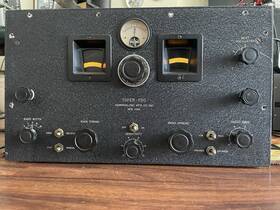
( Brand: Hammarlund ), ( Manufacturer Part Number: SP-100-S ), ( Type: Communucations Receiver ), ( Year Manufactured: 1938 )
Review HAMMARLUND Super Pro Communications Receiver
The **Hammarlund SP-100-S Pro Communications Receiver**, a relic from the golden age of radio engineering, stands as a testament to the precision and innovation of early 20th-century electronics. Manufactured in 1938, this iconic superheterodyne receiver represents the pinnacle of amateur and professional radio technology before the widespread adoption of solid-state components. Designed with a robust, all-metal chassis, the SP-100-S embodies the rugged reliability demanded by shortwave operators of the era, offering coverage from **1250 kHz to 40 MHz** a frequency range that encompassed everything from longwave broadcasting to the upper reaches of the amateur and international bands. Its **superregenerative detection circuit**, a hallmark of Hammarlund s engineering prowess, delivers exceptional sensitivity and selectivity, allowing operators to tune in faint signals with remarkable clarity, even in the presence of strong local interference. The receiver features a **front-panel tuning dial** paired with a calibrated frequency scale, enabling precise adjustments across its extensive range, while the **separate RF and IF gain controls** provide fine-tuned flexibility for optimizing signal reception. The **vacuum tube-based design**, incorporating high-quality tubes such as the 6BA6 (converter) and 6X5 (detector), ensures stable performance and minimal drift, a critical advantage in the days before transistorized circuitry. Built for durability, the SP-100-S includes a **high-impedance headphone jack** and a **line output for external speakers**, catering to both personal listening and public address applications. Its **adjustable RF gain and AGC (Automatic Gain Control)** further enhance usability, making it suitable for both casual listeners and dedicated radio enthusiasts. Today, the SP-100-S is not merely a functional piece of equipment but a highly sought-after collector s item, prized for its historical significance, craftsmanship, and the nostalgic charm of analog radio technology. Whether restored to pristine condition or preserved as a vintage artifact, this receiver remains a fascinating bridge between the early days of wireless communication and the modern era of digital broadcasting.
The **Hammarlund SP-100-S** is a highly sought-after vintage superheterodyne communications receiver from 1938, covering the range of 1250 kHz to 40 MHz. While it is a remarkable piece of radio history, purchasing one comes with distinct advantages and challenges. Below is a detailed breakdown of its pros and cons, followed by a conclusion and recommendation.
---
### **Pros of the Hammarlund SP-100-S**
1. **Historical and Collectible Value**
The SP-100-S is a classic example of early 1930s radio engineering, embodying the craftsmanship and innovation of its era. For collectors, enthusiasts, and historians, it holds significant value as a piece of technological heritage. Its rarity and age make it a desirable item for those interested in vintage electronics.
2. **Superior Build Quality and Craftsmanship**
Hammarlund radios were known for their high-quality construction, with sturdy metal chassis, precise mechanical tuning, and durable components. The SP-100-S reflects this standard, featuring a robust design that has allowed many units to survive in excellent condition over decades.
3. **Excellent RF Performance for Its Time**
As a superheterodyne receiver, the SP-100-S offers superior sensitivity and selectivity compared to earlier regenerative or direct-circuited designs. It was capable of receiving shortwave signals clearly, making it a reliable tool for amateur radio operators, broadcasters, and military communications in its day.
4. **Mechanical Tuning with Dial Calibration**
The receiver uses a mechanical tuning dial with calibrated markings, which provides a tactile and precise tuning experience. This feature appeals to operators who prefer analog tuning over electronic digital controls, offering a nostalgic and engaging way to navigate the radio spectrum.
5. **Versatility in Coverage**
With a coverage range from 1250 kHz (600 meters) to 40 MHz (7.5 meters), the SP-100-S can receive a wide variety of signals, including amateur radio bands, shortwave broadcasts, and early aviation or military communications. This makes it useful for both hobbyist experimentation and historical research.
6. **Modding and Restoration Potential**
The SP-100-S is a popular subject for restoration and modification projects. Enthusiasts can upgrade components, improve performance, or even convert it for modern use (e.g., adding a speaker or power supply). The availability of schematics, parts, and community knowledge makes this process accessible.
7. **Aesthetic and Functional Appeal**
The receiver s vintage design, with its polished metal front panel, knobs, and dials, has a timeless charm that appeals to those who appreciate classic industrial design. It can serve as both a functional radio and a decorative piece in a ham shack or collector s display.
8. **Community and Support**
The vintage radio community is active and supportive, with forums (e.g., Vintage Radio Forum, SWLing Post), clubs, and restoration guides dedicated to Hammarlund and similar receivers. Buyers can easily find advice, parts, and fellow enthusiasts to share their experiences.
---
### **Cons of the Hammarlund SP-100-S**
1. **Age and Wear**
As a 1938 model, the SP-100-S may show signs of age, such as worn knobs, rust, or degraded insulation on components. Even well-maintained units may require restoration work, which can be time-consuming and costly if the receiver is not in pristine condition.
2. **Original Condition and Authenticity**
Many SP-100-S units on the market are not original but have been restored or rebuilt. While this can improve functionality, it may also diminish the historical authenticity of the piece. Buyers must carefully assess whether they prefer an original unit or one that has been modified for modern use.
3. **Power Supply Requirements**
The SP-100-S was originally designed to run on 110V AC power. While some units can be adapted to run on lower voltages or DC, this requires additional modifications and may not be straightforward. Modern power supplies may need to be sourced or built, adding to the cost and complexity.
4. **Component Availability and Replacement Parts**
While Hammarlund parts are still available from specialty suppliers, some components (e.g., specific tubes, capacitors, or resistors) may be difficult or expensive to obtain. Restoring the receiver may require sourcing vintage or reproduction parts, which can be a challenge.
5. **Performance Limitations Compared to Modern Receivers**
The SP-100-S lacks the sensitivity, selectivity, and dynamic range of modern receivers. It may struggle with weak signals, interference, or modern digital modes (e.g., FT8, PSK31). Enthusiasts must manage expectations and may need to supplement it with a contemporary radio for practical use.
6. **Tuning and Calibration Challenges**
Mechanical tuning can be less precise than electronic tuning, and the receiver may require periodic recalibration. The lack of digital frequency displays or memory channels means that finding and locking onto specific frequencies can be more labor-intensive.
7. **Cost of Purchase and Restoration**
A well-preserved SP-100-S can be expensive, often ranging from $1,000 to $3,000 or more, depending on condition and rarity. Restoration costs (e.g., cleaning, tube replacement, wiring, calibration) can add significantly to the total investment, making it a substantial financial commitment.
8. **Limited Modern Connectivity**
The SP-100-S lacks built-in features like USB interfaces, audio outputs for modern speakers, or compatibility with software-defined radio (SDR) tools. Users may need to improvise with adapters or external devices to integrate it into a modern setup.
9. **Potential for Hidden Issues**
Vintage radios can have hidden problems, such as corroded solder joints, failing capacitors, or damaged coils. A thorough inspection by a knowledgeable technician is often necessary to ensure the receiver is sound before purchasing.
10. **Not Ideal for Every Use Case**
While the SP-100-S is excellent for historical study, hobbyist restoration, or as a decorative piece, it may not be practical for everyday use by modern radio operators who prioritize convenience, performance, or digital features.
---
### **Conclusion**
The Hammarlund SP-100-S is a remarkable and historically significant receiver that offers a unique blend of craftsmanship, performance, and nostalgia. It is an ideal choice for collectors, vintage radio enthusiasts, and those who appreciate the art of analog radio engineering. However, it is not a plug-and-play solution for modern use, and purchasing one requires a commitment to restoration, maintenance, and understanding its limitations.
For buyers who are passionate about vintage technology, enjoy hands-on projects, and value historical artifacts, the SP-100-S can be a deeply rewarding investment. On the other hand, those seeking a reliable, high-performance radio for contemporary use may find it impractical or overly expensive compared to modern alternatives.
---
### **Recommendation**
**Buy the Hammarlund SP-100-S if:**- You are a collector or historian interested in preserving and restoring vintage electronics.
- You enjoy mechanical tuning and the tactile experience of analog radios.
- You have the time, skills, and budget to restore or modify the receiver.
- You are part of a community that shares an interest in vintage radio and can provide support or guidance.
- You view the SP-100-S as a hobbyist project rather than a primary communications tool.
**Avoid purchasing the SP-100-S if:**- You are looking for a modern, high-performance receiver with digital features.
- You lack the technical skills or patience for restoration work.
- You cannot afford the upfront cost or potential additional expenses for repairs.
- You prioritize convenience and ease of use over historical authenticity.
- You do not have access to a community or resources for troubleshooting and maintenance.
For those who decide to pursue the SP-100-S, it is advisable to:- Thoroughly inspect the unit before purchasing, ideally with the help of an experienced restorer.
- Budget for restoration costs, including parts, labor, and tools.
- Join vintage radio forums or clubs to connect with others who can offer advice and support.
- Consider pairing it with a modern receiver to complement its limitations.
Ultimately, the SP-100-S is not just a radio; it is a piece of history that can bring immense satisfaction to those who appreciate its legacy. For the right enthusiast, it is an investment in both technology and tradition.
Details:
Hammarlund Super Pro SP-200-S Communications Receiver, 1250KC-40MC, 1939, Extremely Rare 1200 radios manufactured.
part #: sp100 price
- $825.00
specifications hamamateuradio:
- brand: Hammarlund
- mpn: Sp-100-s
- type: Communucations Receiver
- year manufactured: 1938
shipping hamamateuradio:
- cost: $122.19
- class: Standard
- type: Calculated
- transit: 4-10 Days
- service: FedEx Ground / FedEx Home Delivery
- carrier: FedEx
offer hamamateuradio:
- best offers: True
- started: March 1, 2026
- options: Ship-to-home
- quantity: 1
- availability: In Stock
- sold: 0
payments hamamateuradio:
- credit card: Discover
- wallet: Google-pay
- other
returns hamamateuradio:
- policy: No Returns
general hamamateuradio:
- condition: Used
- Radio Communication > Ham, Amateur Radio > Ham Radio Receivers
seller hamamateuradio:
- city: Ann Arbor, Michigan
- # reviews: 123
- rating: 100.0%
Hammarlund SP-100 Is Similar To:
- 200 Series-x Hammarlund Super Pro Or Mhz (41.8% similar) 2 lb 1 kg please review the photos thoroughly and carefully. Happy buying. 0MHZ, SW2 and before mentioned in original-techno. 5 oz power type and voltage line batteries any x volt loudspeaker - for headphones or amp. This unit has not been tested and it is an as sale. The radio amateurs handbook, ...(November 10th, 2018)
- Hq-100 Hammarlund Shortwave Ham Tube Radio Receiver (41.3% similar) Unit is in average cosmetic condition with signs of wear tear usage, internals look good and no corrosion seen. The unit does power on, however the knob is extremely hard to turn. I do not pad shipping prices, postage is calculated using's shipping calculator based on dimensions and weight of the ...(March 12th, 2016)
- Hq-100a Hammarlund Vintage Communications Receiver (60% similar) Item might need some minor repairs to be fully functional. There was also an audible faint static. I did not see the two primary meters light up band spread and main tuner. Please see photos for details. Original operating instructions manual included. A really sharp looking collectible. The item is...(August 28th, 2016)
- Hq-129-x Hammarlund Vintage Hammurland Ham Radio Receiver Untested (42.6% similar) Powers on and sound comes that is as far I can tell selling untested. Hammarlund HQ 129 x tube radio selling untested. With all manual...(November 17th, 2016)
- Hq-150 Hammarlund Rare Communications Receiver 540-31 000 Khz Everything Works (55.4% similar) Note this radio is very heavy. Made sometime between q multiplier. Also probably needs alignment to make it right. 2 am broadcast band works well. Speaker output and headphone jack both work does not have a built in speaker only. Crystal calibrator with selectivity and phasing. Free shipping. ...(January 17th, 2016)
- Hq-160 Hammarlund Receiver (39.6% similar) ...(October 16th, 2016)
- Hq-180 Receiver Hammarlund Clock In Working Condition (34.1% similar) Removed from a working HQ 180 receiver. Comes with a few parts ext rod, screws, knob. USA Canada buyers only please. Clock works fine...(April 15th, 2016)
- Hq-180ac Hammarlund Vintage Tube Communications Receiver (58.7% similar) I inherited from my grand father that passed. 2 speakers as well. He was a genius with all this electronic stuff. Seems to work not sure when I move the dials things work. Looking for 300 us dollars...(May 20th, 2016)
- Hammarlund One Seventy Ham Radio Receiver With Clock (47.5% similar) My husband purchased this Hammarlund receiver but sadly he never got to use it as unexpectedly passed away. This also is untested and I shall be selling that one as too. Hammarlund HQ-one seventy shortwave ham tube receiver with a clock. As it is untested I am selling...(April 29th, 2018)
- Hq-100ac Hammarlund Model Vintage General Coverage Ham Radio Receiver (41.7% similar) Awesome ham radio with speaker unit. Very nice and great condition unit, it looks like was hardly ever used. I am not familiar with broad casting or receiving. I plugged it in and turned on after many years all seems to functions light up...(April 8th, 2018)
- Hq-100c Hammarlund Receiver 100 Working (44% similar) The problematic mica leaf capacitors have been removed from if transformers and replaced with external ceramic see YouTube video Hammarlund HQ-100 HQ-110 HQ-145 HQ-170 repair. It has been carefully tuned and calibrated. The bf fix has been done in this radio see YouTube video Hammarlund HQ-100 HQ-...(July 17th, 2017)
