RCA BTA-5T Broadcast Radio Station Transmitter Manual
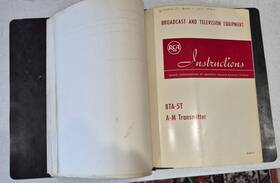
( Brand: Rca ), ( Manufacturer Part Number: BTA-5T ), ( Part Type: Radio Station Transmitter Manual )
Review RCA Broadcast Radio Station Transmitter Manual
The **RCA BTA-5T Broadcast Radio Station Transmitter Manual** is a meticulously crafted technical guide designed to accompany one of RCA s most iconic and versatile broadcast radio transmitters of the mid-20th century. Engineered with precision for both amateur and professional use, the BTA-5T was a compact yet powerful medium-wave (AM) transmitter capable of delivering reliable, high-quality transmissions with a nominal output of 5 watts, making it ideal for small-scale broadcasting, emergency communications, or experimental radio setups. This manual serves as an indispensable resource for operators, engineers, and enthusiasts seeking to understand, assemble, operate, and troubleshoot the BTA-5T with confidence. The document begins with an in-depth introduction to the transmitter s design philosophy, highlighting its modular construction, which includes a separate power supply unit, transmitter tube assembly, and antenna matching circuitry. Each section is accompanied by detailed schematics, wiring diagrams, and component layouts, ensuring clarity for both novice and experienced technicians. The manual meticulously outlines the assembly process, step-by-step, from the initial unpacking of components to the final alignment and testing procedures, emphasizing safety protocols to prevent damage to sensitive vacuum tubes and critical circuitry. Operation instructions are equally thorough, covering everything from tuning the transmitter to adjusting modulation levels, ensuring clear and distortion-free audio transmission. A standout feature of this manual is its comprehensive troubleshooting section, which systematically addresses common issues such as poor signal strength, tube failures, or alignment drift, providing diagnostic tips and corrective actions backed by RCA s engineering expertise. Additionally, the document includes maintenance guidelines to prolong the transmitter s lifespan, including tube replacement procedures, circuit inspections, and environmental considerations to mitigate humidity and temperature fluctuations. Written in a clear, technical yet accessible style, the RCA BTA-5T manual reflects the company s legacy of innovation in radio technology, offering a blend of historical significance and practical utility. Whether used as a reference for restoring vintage equipment or as a foundational guide for modern DIY radio projects, this manual remains an essential companion for anyone working with the BTA-5T, bridging the gap between classic broadcast engineering and contemporary radio enthusiasts.
### **Pros and Cons of buying a RCA BTA-5T Broadcast Radio Station Transmitter**
The **RCA BTA-5T** is a medium-wave (AM) broadcast transmitter designed for low-power radio station operation. Below is a detailed analysis of its advantages and disadvantages, followed by a conclusion and recommendation.
---
### **Pros of the RCA BTA-5T**
1. **Compact and Portable Design**
The BTA-5T is relatively small and lightweight compared to larger broadcast transmitters, making it suitable for mobile or temporary radio station setups. Its portability allows for flexibility in broadcasting locations, such as community events, emergency communications, or field operations.
2. **Low Power Output (500 Watts)**
While 500 watts is not extremely high for professional broadcast standards, it is sufficient for local or low-power radio stations, pirate radio operations, or experimental broadcasting. The power output is adequate for covering a moderate range in urban or suburban areas, depending on antenna quality and terrain.
3. **Modular and Upgradable**
The BTA-5T was designed with modularity in mind, allowing for upgrades or modifications to its components. This includes the ability to replace or enhance the power amplifier, modulator, or other internal circuitry, which can extend its lifespan and adaptability to modern broadcasting needs.
4. **Reliability and Durability**
RCA was known for producing robust electronic equipment, and the BTA-5T is no exception. It is built with components that can withstand consistent use, making it a dependable choice for operators who require long-term performance without frequent failures.
5. **Compatibility with Standard Broadcast Equipment**
The transmitter is designed to work with standard broadcast microphones, audio sources, and control interfaces. This compatibility simplifies integration into existing studio setups or makes it easier to connect to external audio equipment.
6. **Historical and Collectible Value**
As an older model (originally manufactured in the mid-20th century), the BTA-5T holds historical significance for radio enthusiasts and collectors. It may appeal to hobbyists interested in vintage broadcasting technology or those restoring classic radio equipment.
7. **Lower Initial Cost Compared to Modern Transmitters**
Due to its age, the BTA-5T is often significantly cheaper than contemporary broadcast transmitters, which may have advanced digital features but come with higher price tags. This makes it an attractive option for budget-conscious operators.
8. **Simple Operation and Maintenance**
The transmitter is designed for straightforward operation, with basic controls for tuning, modulation, and power management. While it lacks the automation features of modern systems, its simplicity reduces the learning curve for operators unfamiliar with complex broadcast equipment.
---
### **Cons of the RCA BTA-5T**
1. **Outdated Technology**
The BTA-5T relies on analog circuitry, which means it lacks modern features such as digital tuning, remote control capabilities, or integration with digital audio workstations (DAWs). This can limit its functionality in today s broadcasting landscape, where digital workflows are increasingly standard.
2. **Limited Range and Coverage**
At 500 watts, the BTA-5T s range is inherently limited compared to higher-power commercial transmitters (which can exceed 10,000 watts). Its coverage area is dependent on the antenna s efficiency, terrain, and interference, making it unsuitable for widespread or long-distance broadcasting.
3. **Maintenance and Parts Availability**
As a vintage piece of equipment, finding replacement parts or technicians familiar with its inner workings can be challenging. RCA has long since discontinued production, and specialized repair services may be scarce. This could lead to higher long-term maintenance costs or difficulty in troubleshooting issues.
4. **Regulatory and Legal Restrictions**
Operating a broadcast transmitter, even a low-power one like the BTA-5T, requires compliance with local and federal regulations. In many countries, unauthorized broadcasting (e.g., pirate radio) is illegal and can result in fines or equipment confiscation. The BTA-5T s analog nature may not align with modern regulatory requirements for spectrum use.
5. **No Built-in Protection Features**
Modern transmitters often include safety features such as over-voltage protection, automatic shutdowns, and thermal regulation. The BTA-5T lacks these safeguards, increasing the risk of damage from power surges, overheating, or improper operation.
6. **Limited Audio Quality and Flexibility**
The transmitter s analog modulation means it may not deliver the same audio fidelity as digital broadcasting methods. Additionally, it lacks features like noise reduction, equalization, or compatibility with modern audio formats, which can affect broadcast quality.
7. **Environmental and Safety Concerns**
Older transmitters like the BTA-5T may contain hazardous materials (e.g., lead in solder, outdated capacitors) that pose environmental risks if not disposed of or repaired properly. Operators must adhere to e-waste regulations when handling or retiring the equipment.
8. **Dependence on External Power Sources**
While the BTA-5T can operate on standard AC power, its lack of built-in battery backup or portable power options limits its use in off-grid or emergency scenarios. This can be a drawback for mobile or disaster-relief broadcasting.
---
### **Conclusion**
The **RCA BTA-5T** is a functional and reliable broadcast transmitter for specific use cases, particularly for hobbyists, collectors, or operators in low-power or temporary broadcasting scenarios. Its compact size, historical value, and lower cost make it appealing to those who prioritize simplicity and nostalgia over modern features. However, its analog limitations, regulatory challenges, and maintenance difficulties render it less suitable for professional or large-scale broadcasting.
For **modern radio stations**, **pirate broadcasters**, or **educational purposes**, the BTA-5T may still serve as a useful tool, provided the operator is prepared to address its shortcomings. For **commercial or high-power broadcasting**, however, contemporary digital transmitters with advanced features, regulatory compliance, and better reliability would be far more practical.
---
### **Recommendation**
- **Buy the RCA BTA-5T if:**- You are a **radio enthusiast or collector** interested in vintage equipment.
- You need a **low-power, portable transmitter** for hobbyist projects, emergency communications, or temporary broadcasts.
- You are willing to **invest time in maintenance and troubleshooting** due to its age.
- You operate in a **legal gray area** (e.g., pirate radio) and accept the risks associated with analog broadcasting.
- **Avoid the RCA BTA-5T if:**- You require **modern digital features**, such as remote control, automation, or high-fidelity audio.
- You need **compliance with current broadcasting regulations**, as analog transmitters may not meet spectrum management standards.
- You seek **long-term reliability without maintenance hassles**, as parts and expertise may be difficult to obtain.
- You plan to **broadcast professionally or at scale**, where higher-power, modern transmitters are necessary.
For those considering alternatives, modern **low-power digital transmitters** (e.g., from brands like **Icom, Yaesu, or specialized broadcast manufacturers**) offer better compliance, reliability, and audio quality, though at a higher cost. If cost is a primary concern, the BTA-5T remains a viable option for niche applications.
Details:
Manual is 70 pages plus all the updates and tube data sheets. RCA Broadcast transmitter manual and instruction book with drawings, schematics, parts list, factory update service bulletins.
part #: bta5t price
- $33.96
specifications hamamateuradio:
- brand: Rca
- mpn: Bta-5t
- part type: Radio Station Transmitter Manual
returns hamamateuradio:
- policy: No Returns
general hamamateuradio:
- condition: Used
- Radio Communication > Ham, Amateur Radio > Ham Radio Transmitters
seller hamamateuradio:
- # reviews: 632
- rating: 100.0%
- city: Ojai, California
offer hamamateuradio:
- sold: 0
- availability: In Stock
- started: February 26, 2026
- quantity: 1
- options: Ship-to-home
payments hamamateuradio:
- other
- credit card: Visa
- wallet: Apple-pay
shipping hamamateuradio:
- cost: $15.25
- transit: 5-12 Days
- class: Standard
- carrier: USPS
- type: Calculated
- service: USPS Ground Advantage
Rca BTA-5T Is Similar To:
- Acr-155 Rca Vintage Ham Radio (34.1% similar) Rca ACR-155 vintage ham radio receiver - powers on has speaker output this is very old and I'm not an expert radios such as. However, the receiver turns on and speaker makes noise. Inside the unit, vacuum tubes glow when powered up...(August 17th, 2017)
- Vintage Radio Ar8507 Ham Rca Radiomarine Receiver Model (35.2% similar) It comes to you as found and untested. It was a recent estate find. Up for bids is this vintage Rca model AR8507 radio marine receiver. It looks to be in good cosmetic condition...(March 12th, 2015)
- Aircraft Transmitter Military Avr-20 Avt-112a Receiver Radio Rca Ww2 (29.8% similar) Rca ATV 112A military radio aircraft transmitter WW2 and Rca Ave 20 receiver from a collector's estate. Left just like we found it. Untested sold as is as found...(March 9th, 2015)
- Bta-10u Rca 4 Handles For (30.8% similar) Handles could use a buffing to bring out the original luster classic standard Rca component that may work on many different types of transmitters and equipment cabinets. Comes with mounting screws. For offer is a set of four 4 panel handles Rca BTA-10U am broadcast transmitter...(October 6th, 2017)
- Bte-15a Rca Vintage Fm Broadcast (37.6% similar) The unit is complete, but will doubtless require some TLC. Please look at all the pictures and judge for yourself. It is completely untested, therefore I am selling as-is. This vintage exciter was removed from a transmitter that had been sitting idle for many years...(September 20th, 2017)
- Crc-38145 Rca Crc38145 Transmitter Tube (43.5% similar) ...(December 1st, 2017)
- Crv-16152 Rca Vintage Military Radio Receiver Model For Aircraft Used With (33.1% similar) I ship worldwide inquire for overseas shipping handling cost here is a single vintage Rca military radio receiver model CV aircraft used with DZ2 direction finder. Next to last photo shows what equipment is normally used with this unit. Please bid accordingly. Unit has not been tested in any way nor...(April 5th, 2018)
- Crv-46147 Rca Us Navy Wwii Rbb-1 Radio Vintage Receiver Great Lakes (35% similar) Model Rb 1 radio receiving equipment navy dept...(November 3rd, 2016)
- Crv-46148 Wwii Rca Rbc-2 Us Navy Radio Receiver (32% similar) ...(November 10th, 2016)
- Crv-46151 Aviation Radio Us Type Rca Receiver Navy Vintage Ww2 Wwii Aircraft Arb (30.1% similar) What a great find. Here is a vintage WWII us navy Rca aircraft Arab radio receiver aviation type CV in very good condition see photos. Bought this recently at an estate. The item as you can see from the photos is presentable. Please see to photos for condition and quality. Inside is very clean as ...(September 9th, 2015)
- Cze-t251 Thanksbuyer Adjustable Fm Transmitter Antenna Power Cord And Rca Cables (37.6% similar) CZE-T251 adjustable FM transmitter w antenna, power cord and Rca cables. This item has never been used, comes brand new in box...(June 21st, 2018)
