RCA RADIOMARINE AR-8501 Merchant Marine Receiver Circa
( Brand: Rca Radiomarine ), ( Manufacturer Part Number: AR-8501 ), ( Type: Lf Receiver ), ( Band: Hf ), ( Year Manufactured: 1932 ), ( Country Of Origin: United States )
Review RCA RADIOMARINE Vintage Merchant Marine Lf Receiver Circa
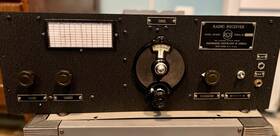
The RCA Radiomarine AR-8501 Merchant Marine LF Receiver, manufactured circa 1934, stands as a relic of early maritime radio technology, embodying the ingenuity and precision of its era. Designed for commercial and industrial applications, this robust radio receiver was specifically engineered to operate in the low-frequency (LF) spectrum, a critical range for long-range communication and navigation at a time when global maritime trade relied heavily on reliable, dependable radio signals. The AR-8501 reflects the sophisticated yet practical engineering of the 1930s, featuring a sturdy metal cabinet with a classic Art Deco-inspired aesthetic, blending functionality with a touch of elegance. Its compact yet substantial form factor suggests durability, essential for the harsh conditions encountered on merchant ships and industrial sites.
At its core, the AR-8501 employs a vacuum tube-based design, a hallmark of early radio technology, which allowed for the amplification and detection of weak LF signals over vast distances. The receiver is likely equipped with a series of high-quality vacuum tubes, including a front-end tube for signal amplification and a detector tube for converting the incoming radio waves into audible signals. The tuning mechanism, possibly featuring a dial with calibrated markings, enables operators to precisely adjust the receiver to the desired frequency, a critical feature for tuning into maritime distress signals, weather broadcasts, or commercial communications. The inclusion of a built-in speaker or headphone jack would have provided clear audio output, ensuring that messages were intelligible even in noisy environments.
The AR-8501 is not merely a piece of equipment but a testament to the technological advancements that revolutionized maritime communication. During its time, LF radio waves were particularly valuable for their ability to travel long distances with relatively low power, making them ideal for global shipping routes. This receiver would have been a vital tool for ship captains, navigators, and radio operators, enabling them to stay connected with shore stations, other vessels, and emergency services. Its design likely incorporates features such as a robust power supply, possibly accommodating both AC and DC inputs, to ensure reliable operation across various power sources available on ships.
Beyond its technical specifications, the AR-8501 holds historical significance as a symbol of the golden age of radio and the expansion of global trade. As collectors and enthusiasts of vintage technology, this receiver offers a glimpse into the past, showcasing the craftsmanship and innovation that paved the way for modern communication systems. Its preservation and study not only honor the legacy of RCA Radiomarine but also provide insight into the evolution of technology that continues to shape our world today. For those with an appreciation for history and engineering, the AR-8501 is a fascinating artifact that bridges the gap between the early 20th century and contemporary communication technologies.
The RCA Radiomarine AR-8501 Merchant Marine LF Receiver, manufactured circa 1934, is a vintage radio designed for maritime use, primarily operating in the low-frequency (LF) band. Below is a detailed analysis of its pros and cons, followed by a conclusion and recommendation.
---
**Pros:**1. **Historical and Collectible Value** The AR-8501 is a rare and well-preserved example of early maritime radio technology, particularly from the pre-WWII era. It holds significant historical value for collectors of vintage electronics, radio enthusiasts, and maritime historians. Its condition and authenticity can make it a desirable piece for museums or private collections.
2. **Technical and Educational Interest** The receiver represents a fascinating example of early radio engineering, featuring vacuum tube technology, crystal-controlled circuits, and mechanical tuning. For hobbyists or engineers interested in the evolution of radio technology, studying or restoring this unit can be highly educational. It offers insights into the limitations and innovations of its time, such as the use of longwave (LF) for maritime communication before the widespread adoption of shortwave.
3. **Functionality for Niche Purposes** While not practical for modern commercial use, the AR-8501 could serve specific niche purposes. For example:
- **Amateur Radio Experimentation**: Enthusiasts might repurpose it for historical reenactments, educational demonstrations, or as part of a larger vintage radio setup to simulate early maritime communication.
- **Maritime History Research**: Organizations studying naval or merchant marine history might use it to understand the operational constraints of early radio equipment, though modern alternatives would likely be more reliable.
- **Artistic or Thematic Projects**: Filmmakers, writers, or artists recreating historical settings could incorporate the receiver for authenticity, though its functionality would be limited.
4. **Potential for Restoration and Customization** Restoring the AR-8501 can be a rewarding project for skilled electronics hobbyists. With the right expertise, components can be replaced, circuits repaired, and the unit brought back to working order. Some enthusiasts enjoy the challenge of reviving vintage technology, and the process can yield a fully functional (if limited) radio.
5. **Aesthetic Appeal** The AR-8501 s design reflects the industrial and utilitarian style of early 20th-century radio equipment. Its robust construction, metal casing, and vintage controls may appeal to those who appreciate the craftsmanship of the era. It could serve as a decorative piece in a collection of historical electronics.
---
**Cons:**1. **Limited Practical Use** The AR-8501 is outdated by modern standards and lacks the functionality of contemporary radios. It operates primarily in the LF band (around 150 300 kHz), which is not ideal for modern communication due to:
- **Poor Signal Quality**: LF signals are prone to interference, atmospheric noise, and limited range compared to modern VHF/UHF or HF (shortwave) radios.
- **Outdated Technology**: The receiver relies on vacuum tubes, which are fragile, require power, and are less efficient than solid-state components. Modern radios offer digital tuning, better sensitivity, and longer battery life.
- **No Modern Features**: There are no provisions for digital communication, GPS integration, or compatibility with contemporary maritime systems (e.g., AIS, VHF-DSC).
2. **High Maintenance and Reliability Issues** Vintage radios like the AR-8501 require significant upkeep to remain functional:- **Vacuum Tube Replacement**: Tubes degrade over time and must be sourced, which can be difficult and expensive. Some tubes may no longer be in production.
- **Component Wear**: Mechanical parts (e.g., tuning capacitors, switches) may wear out or corrode, requiring skilled repair work.
- **Power Requirements**: The unit likely requires a stable power source (e.g., batteries or AC power), which may not be readily available in modern setups without modifications.
- **Environmental Sensitivity**: Exposure to moisture, dust, or temperature fluctuations can damage the internal circuitry, especially if the unit is not properly preserved.
3. **Cost of Acquisition and Restoration** Purchasing a vintage radio in good condition can be expensive, especially if it is rare or historically significant. Restoration costs may also add up quickly, particularly if specialized parts or expertise are required. For example:
- **Parts Sourcing**: Finding compatible tubes, capacitors, or resistors may require searching through antique electronics markets or eBay, which can be costly.
- **Labor**: If the unit is beyond basic DIY repair, hiring an electronics technician could be prohibitively expensive.
4. **Legal and Regulatory Constraints** Using the AR-8501 for any form of communication may violate modern regulations:- **Frequency Allocation**: LF bands are still allocated for specific uses (e.g., time signals, navigation), but unauthorized use for general communication could interfere with licensed operations or be considered illegal.
- **Licensing Requirements**: Modern radios used for maritime communication must comply with international regulations (e.g., ITU, FCC). Operating an unlicensed or outdated device could lead to fines or legal issues.
5. **Lack of Modern Connectivity** The AR-8501 cannot interface with contemporary systems. For example:- **No Audio Output for Modern Equipment**: Connecting it to speakers or recording devices may require additional adapters or modifications.
- **No Digital Integration**: It cannot be used alongside GPS, AIS, or other modern maritime navigation tools, limiting its utility in a practical setting.
6. **Time-Consuming to Operate** Early radios often require manual tuning, adjustments, and patience to receive signals. The AR-8501 would not offer the convenience of push-button tuning or automatic frequency selection found in modern radios.
7. **Ethical and Preservation Concerns** If the unit is part of a historical collection or museum piece, purchasing it for personal use may be seen as unethical. Some vintage radios are protected or restricted from private ownership due to their cultural or historical significance.
---
**Conclusion:**The RCA Radiomarine AR-8501 is a remarkable piece of technological history with undeniable appeal for collectors, historians, and enthusiasts. Its primary value lies in its educational, aesthetic, and nostalgic significance rather than its practical utility. While restoring and operating the unit can be a rewarding experience for those with the skills and resources, it is not a viable replacement for modern maritime communication equipment. The challenges of maintenance, reliability, and legal compliance make it more suited for display, study, or specialized hobbyist projects than for everyday use.
---
**Recommendation:**- **For Collectors or Historians**: If you are interested in vintage electronics, maritime history, or radio technology, the AR-8501 is a worthwhile acquisition for its historical value. Ensure you purchase it from a reputable source with documentation to verify its authenticity and condition. Consider joining vintage radio restoration groups for guidance on preservation and repair.
- **For Hobbyists or DIY Enthusiasts**: If you have experience with electronics and are willing to invest time and money into restoration, the AR-8501 could be a fascinating project. However, be prepared for the challenges of sourcing parts and maintaining the unit long-term. Pair it with modern equipment (e.g., a separate receiver for actual communication) to avoid practical limitations.
- **For Practical Maritime Use**: Do not rely on the AR-8501 for modern maritime communication. Instead, invest in a contemporary GMDSS (Global Maritime Distress and Safety System) compliant radio, such as a VHF-DSC or HF radio with AIS integration. These devices are legally required for commercial vessels and offer reliability, safety, and compliance with international regulations.
- **For Display or Educational Purposes**: If you lack the skills or interest in restoration, consider purchasing a non-functional unit for display purposes. Many museums and educational institutions maintain such artifacts to preserve their historical context without the need for operation.
Ultimately, the AR-8501 is a "collector s item" rather than a functional tool. Its true value is in its story and the opportunity it provides to engage with the past, not its ability to serve modern needs.
Details:
One B and one C are included. Beautiful example of radio history. Very rare marine receiver. Untested as there is no power supply, so buyer will need to obtain or construct a suitable one.
I do not have all of the coils as there are three sets A, B and C. All original otherwise. Fully restored cosmetically.
part #: ar8501 price
- $250.00
specifications hamamateuradio:
- brand: Rca Radiomarine
- mpn: Ar-8501
- type: Lf Receiver
- band: Hf
- year manufactured: 1932
- country of origin: United States
returns hamamateuradio:
- policy: No Returns
seller hamamateuradio:
- rating: 100.0%
- # reviews: 1211
- city: Fredericksburg, Virginia
payments hamamateuradio:
- credit card: Discover
- other
- wallet: Paypal
general hamamateuradio:
- condition: Used
- Radio Communication > Ham, Amateur Radio > Ham Radio Receivers
shipping hamamateuradio:
- service: USPS Ground Advantage
- type: Calculated
- class: Standard
- carrier: USPS
- cost: $138.55
- transit: 9-13 Days
offer hamamateuradio:
- quantity: 1
- options: Ship-to-home
- sold: 0
- started: May 19, 2026
- availability: In Stock
Rca Radiomarine AR-8501 Is Similar To:
- 6dq5 Rca Vintage Tubes New (31.3% similar) Pair of new in original Rca boxes...(May 6th, 2017)
- Acr-155 Rca Vintage Ham Radio (32.3% similar) Rca ACR-155 vintage ham radio receiver - powers on has speaker output this is very old and I'm not an expert radios such as. However, the receiver turns on and speaker makes noise. Inside the unit, vacuum tubes glow when powered up...(August 17th, 2017)
- Ar-88-d Rca Reconditioned Communications Receiver (38.7% similar) The cabinet had been repainted over sprayed in some areas by previous owners at point radio life. All tube sockets contacts were detoxed and cleaned. The audio readability is just remarkable. This bezel is made from all of the front panel rotary switches mechanically operated with some stiffness on ...(September 26th, 2018)
- Ar-88d Rca Receiver Reconditioned (35% similar) Two of the metal tub bypass capacitor assemblies were already removed and replaced with modern individual 600 CDC capacitors. However, I cannot claim it is dead on at every point the dial face for each selected band. The OA3 regulator tube was properly re-wired along with a new loading resistor ...(March 19th, 2018)
- Vintage Radio Ar8507 Ham Rca Radiomarine Receiver Model (40% similar) It comes to you as found and untested. It was a recent estate find. Up for bids is this vintage Rca model AR8507 Radiomarine receiver. It looks to be in good cosmetic condition...(March 12th, 2015)
- Ar-88 Rca General Coverage Receiver (34.3% similar) I will furnish a manual copy and an Rca speaker see photos which needs refinishing but sounds very good. I need to sell it, even though it is one of my very favorite radios, because I have too many radios. As seen in the pictures, a non original, but attractive, tuning meter has been installed which...(November 11th, 2015)
- Avr-11a Rca Rare Vintage Airport (37.3% similar) Rare vintage Rca AVR-11A airport receiver. Unit has not been used for years. It is from a ham estate. It was mounted in a rack, there is no cabinet or bottom cover. These very seldom come up for sale. It is dirty may have modifications as pictured...(November 28th, 2017)
- Aircraft Transmitter Military Avr-20 Avt-112a Receiver Radio Rca Ww2 (36.2% similar) Rca ATV 112A military radio aircraft transmitter WW2 and Rca Ave 20 receiver from a collector's estate. Left just like we found it. Untested sold as is as found...(March 9th, 2015)
- Bte-10ct Rca Vintage Tube Type (30% similar) There is tons of information on this setup on-line including all manuals needed for repair and adjustment. Any questions call thanks Larry. Prior to power up I would check supply filter caps as sitting this long am sure they are bad or shorted. Because of age, not being used in years, 50 year old ...(July 2nd, 2017)
- Bte-15a Rca Vintage Fm Broadcast (33.3% similar) The unit is complete, but will doubtless require some TLC. Please look at all the pictures and judge for yourself. It is completely untested, therefore I am selling as-is. This vintage exciter was removed from a transmitter that had been sitting idle for many years...(September 20th, 2017)
- Cr-88b Rca Shortwave Receiver Works Well (34.5% similar) By comparing the AR-88 receiver to its predecessor, AR-60, which sold for 475 in configuration used USCG CGR-32-1, one can estimate that cost at least maybe even slightly more. There is no 100KC marker. By the early 1950S, Rca '88 receiver was still one of best for stability, sensitivity and high ...(March 18th, 2019)
